Record-breaking 2025 Iberian Fire Season was three times larger due to climate change
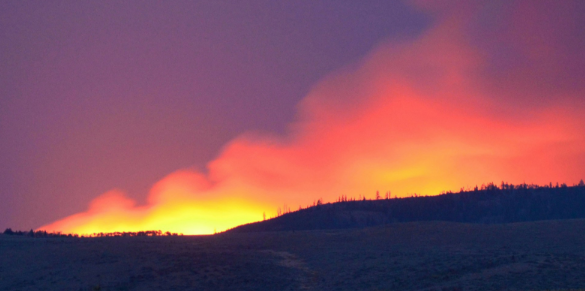
The latest global State of Wildfires report shows that the extreme fire-prone weather experienced across Spain and Portugal in 2025 was three times more likely due to human-caused climate change, and the area burned was three times larger.
2025 saw the largest wildfire burned area on record – even surpassing figures already in for 2026 – across the European Union according to the European Forest Fire Information System (EFFIS), one of the datasets used in the analysis. The wildfire season was particularly severe in Iberia, where more than 40,000 people were evacuated as 14 megafires* raged in the region. Spain recorded its highest burned area since 2002, and Portugal saw the largest single wildfire on record.
Fires similar to those experienced in Europe during 2025 could burn around one-third more area within the next 20 years. However, the study suggests that strong emissions cuts could substantially limit how much worse extreme fires become later in the century.
The report also warns that climate change is making the most severe wildfires more likely, more intense, and more damaging in many regions across the world. Its case studies of extremely destructive fires in Canada, Northwest Iberia, and Chile illustrate just how devastating the consequences can be for both people and important ecosystems. However, the report also makes clear that reducing anthropogenic emissions can make a significant difference to how large such events could be in the future.
The State of Wildfires 2025–2026 report brings together contributions from scientists at the Met Office, the European Centre for Medium-Range Weather Forecasts (ECMWF), the University of East Anglia (UEA), and the UK Centre for Ecology & Hydrology (UKCEH) alongside leading global experts from over 20 countries.
Chantelle Burton is a wildfire scientist and the Met Office lead author. She said: “The findings show a clear message: we are already seeing the visible impacts of climate change on extreme fires around the world. However, with strong action to cut emissions, we can still avoid worse fires happening in the future.”
(*) A megafire is defined as a burned area of at least 100 square kilometres.
Explaining extreme fires
Across the State of Wildfire reports, researchers identify two climate-linked patterns in the drivers of recent extreme wildfires.
Prolonged drying before periods of extreme fire weather has contributed to exceptional fires in carbon-rich regions such as Canada, Amazonia, the Pantanal-Chiquitano region and the Congo Basin. In fuel-limited or fire-adapted regions, including Northwest Iberia and Los Angeles, unusually wet conditions boosted vegetation growth before rapid drying, extreme heat and drought created the conditions for abnormally intense fires. Similar wetting followed by drying patterns were also linked to the extreme fires across Europe this summer.
Dr Francesca Di Giuseppe, the ECMWF lead author, said: “Enhanced vegetation growth after unusually wet conditions in regions like Iberia, followed by extreme heat and drought exacerbates the risk in a process known as hydroclimatic rebound, setting the stage for severe fires.”
Chile showed a more mixed pattern, with both vegetation conditions and drying playing a role, although prolonged drying was the dominant mechanism behind the January–February 2026 fires.
The role of climate change
The team combined satellite observations of wildfires, vegetation cover and weather conditions with multiple weather, climate and fire models to assess climate change’s impact on fire risk in three key wildfire episodes of the 2025-26 fire season, in Canada, Northwest Iberia, and Chile. The attribution analysis in the report finds that climate change substantially increased both the likelihood and the scale of major wildfire events:
- In Canada, climate change made burned area 10 times more likely and 9 times larger.
- In Northwest Iberia, burned area was around three times larger and more likely.
- In Chile, the burned area was around twice larger and more likely.
Dr Douglas Kelley, UKCEH, also member of the TerraFIRMA project, said: “The strongest climate change signal appears in the most extreme fire events rather than in average fire activity. That means future wildfire seasons may not simply become uniformly worse, but that the most damaging years are likely to become more severe.”
Extreme fire impacts despite a low global fire season
The 2025–2026 global fire season saw the lowest global burned area and fire emissions on record since 2002 driven by low burning in African savannas, yet this global metric hides exceptionally severe regional extremes. These fires had major impacts on air quality, caused fatalities and mass evacuations, generated significant socioeconomic costs, and affected carbon-rich ecosystems and carbon projects.
Among the most impactful events of the 2025-26 fire season were fires in Canada, Northwest Iberia and Chile/Argentina.
Canada: Canada experienced a third consecutive extreme wildfire season over July-August 2025. Fire emissions were nearly triple the 2002–2024 average, around 70,000 people were evacuated, direct costs reached approximately USD 360 million, and air quality was severely degraded. Climate change likely almost doubled the likelihood of extreme fire weather and had an even stronger effect on burned area. Under a high-emissions scenario (SSP3-7.0), fires similar to those of 2025 are projected to burn around 6% more area by the end of the century.
Northwest Iberia: The Northwest Iberian Peninsula experienced several of its largest fires on record during an August 2025 fire episode that caused 14 fatalities and more than 42,000 evacuations. Climate change made extreme fire weather during the episode around three times more likely. Under a high-emissions scenario (SSP3-7.0), fires similar to those of July–August 2025 are projected to burn around 78% more area by the end of the century, with some projections indicating increases of up to sevenfold.
Chilean Temperate Forests and Matorral: Fires across Chile and northern Patagonia caused 23 fatalities and displaced around 52,000 people. The fires also reached Los Alerces National Park, a UNESCO World Heritage Site, and its ancient alerce forests, which include trees thousands of years old. Climate change made extreme fire weather during the episode around 50% more likely. Under a high-emissions scenario, fires similar to those of January–February 2026 are projected to burn around 34% more area by the end of the century.
Dr Matthew Jones, UEA, said: “2025-26 reminds us that not all fires are equal. We once again saw a low-ranking year for area burned globally, but a catalogue of high-impact events which caused devastating regional to local impacts on society, and immense CO2 emissions that further accelerate the pace of climate change.”
Read the Report: https://stateofwildfires.com/latest-report/