Climate change has made extreme wildfire weather far more likely, study finds
Zhongwei Liu, University of Leicester & National Centre for Earth Observation
Human-caused climate change has dramatically increased the likelihood of extreme wildfire weather in several of the world’s most fire-prone regions, according to new attribution research. Using large climate-model ensembles and fire weather indices based on temperature, humidity, rainfall and wind conditions, researchers assessed how climate change has altered the risk of severe fire seasons in regions including the Amazon, Pantanal, Congo Basin and southern California.
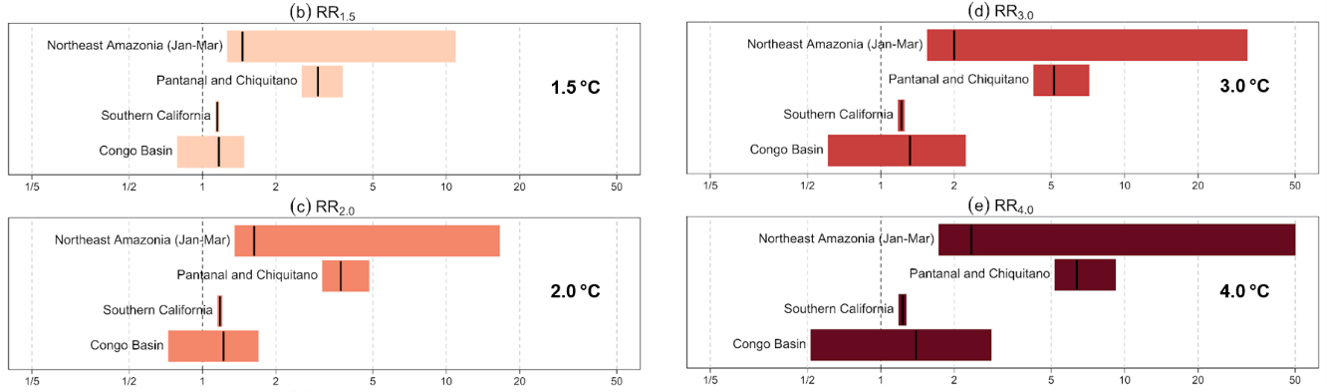
The analysis found particularly strong signals in tropical regions. Extreme fire weather conditions in northeast Amazonia are estimated to be more than 30 times more likely than they would have been without human-driven climate change, while similar conditions in the Pantanal have become four to five times more likely and those in the Congo Basin three to eight times more likely.
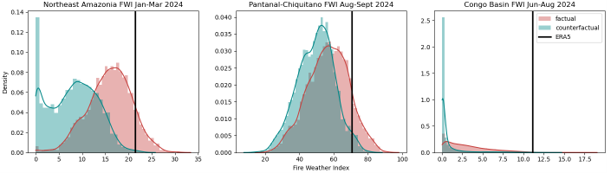
Looking ahead, the study projects that extreme fire weather conditions will continue to rise as global temperatures increase. Under warming scenarios ranging from 1.5°C to 4°C above the current climate condition, the probability of extreme fire weather events is expected to increase further across many of the regions examined, including southern California. Researchers are now expanding the work using multiple Earth system models with large ensembles to provide more robust estimates of how climate change is influencing wildfire risk around the world.